


Earlier this week, Semafor’s Max Tani reported about a leadership shakeup at CityCast, which is a podcasts-and-newsletters local media startup that has branches in 13 cities. Founded in 2021, and backed by Graham Holdings (as in the Graham family that owned and operated the Washington Post), my hometown of Washington D.C. has been one of CityCast’s marquee markets. But while I admire a number of the journalists working there, it has never quite found itself working its way into my daily media diet. (My number of podcasts and newsletters is already overcapacity).
I was struck by outgoing CEO David Plotz’s comments to Tani, noting that, five years in, the company is not yet profitable.
“People do not want local news,” Plotz said. “They want to know about things to do in their city. They want to know what’s going on in their city. But if you ask them about local news, they do not express an interest. Local news as a concept does not really have a lot of valence. It’s more like learning about my city.”
He also noted that national media narratives and big political fights were not as animating to local audiences, who seek out information to be connected to their local communities.
“The need that people are finding met in local media has almost nothing to do with the highly partisan, cortisol-driven conversations that drive national media and national news media,” he said.
My first thought upon reading this was: “duh.”
If there is a single lesson of the mass media in the internet era it’s that, when given the option, people will consume news and information a la carte in ways that do not support the robust news ecosystem that once existed in local markets (fully staffed newspapers and magazines and television stations). Once we could get box scores, weather and job postings elsewhere, the majority of us stopped reading about the city council — assuming we ever read those articles in the first place.
In our industry, the flailing of the local news ecosystem is often referred to as a “market failure,” but I, to some extent, agree with Richard Gingras, a news executive and the former longtime head of Google’s news initiatives, when he dismisses that framing. Our media companies were not failed by the market — rather they failed to adapt to a market that changed.
Digital advances created a more fragmented media in which people are able to get the information they wanted directly (a neighborhood newsletter, a sports score push alert on your phone, your weather app) without having to consume a mass media news bundle (watching the 7pm news, picking up tomorrow’s paper). As a result, the big-box advertisement revenue that powered much of the “golden age of newspapers” disappeared.
In the years that followed, as Gingras writes, “There has not been a market failure. There has been a failure of thoughtful market assessment, a failure of imagination, and a failure of innovation.”
As exceptions, he notes the success of the New York Times, which has pivoted from an advertisement-based revenue model to one built on subscriptions, as well as startups like Politico and his own Village Media, an innovative Canadian media company focused on local news.
Here is how Gingras describes it:
Village does this through staffed newsrooms offering free access to a broad range of local information, from watchdog journalism to community events and local business news. In mature markets, more than 25 per cent of households visit daily. Its broader approach also includes community partnerships and opportunities for residents to engage with local issues, including through the creation of “Community Conversations” that assemble diverse representatives who gather for moderated discussions on key issues. Village demonstrates that local news can be profitable and self-sustaining without a subscription paywall, and that local advertising can serve both as a source of useful community information and as support for the local economy.
What Village Media is doing, at least what it says it is doing, is what many of us have long advocated for from the local press — community institutions that provide tangible good and help create cohesion and foster understanding.
But while Gingras holds out Village media as something aspirational, I see it as, at best, an exception that proves the rule. But even were this model — privately held, advertising-supported community news outlets — replicable at scale, what would become of Americans outside of their coverage areas? What about communities without sufficient local advertising base? Or communities where residents have well-earned distrust of traditional (or “corporate”) media institutions.
Another way of asking this is: If Village Media were suddenly to spring up in every place that has lost a local newspaper, what reason would we have to believe it would eliminate, rather than replicate, the biases, financial dynamics, and coverage gaps of the pre-internet mass media landscape?
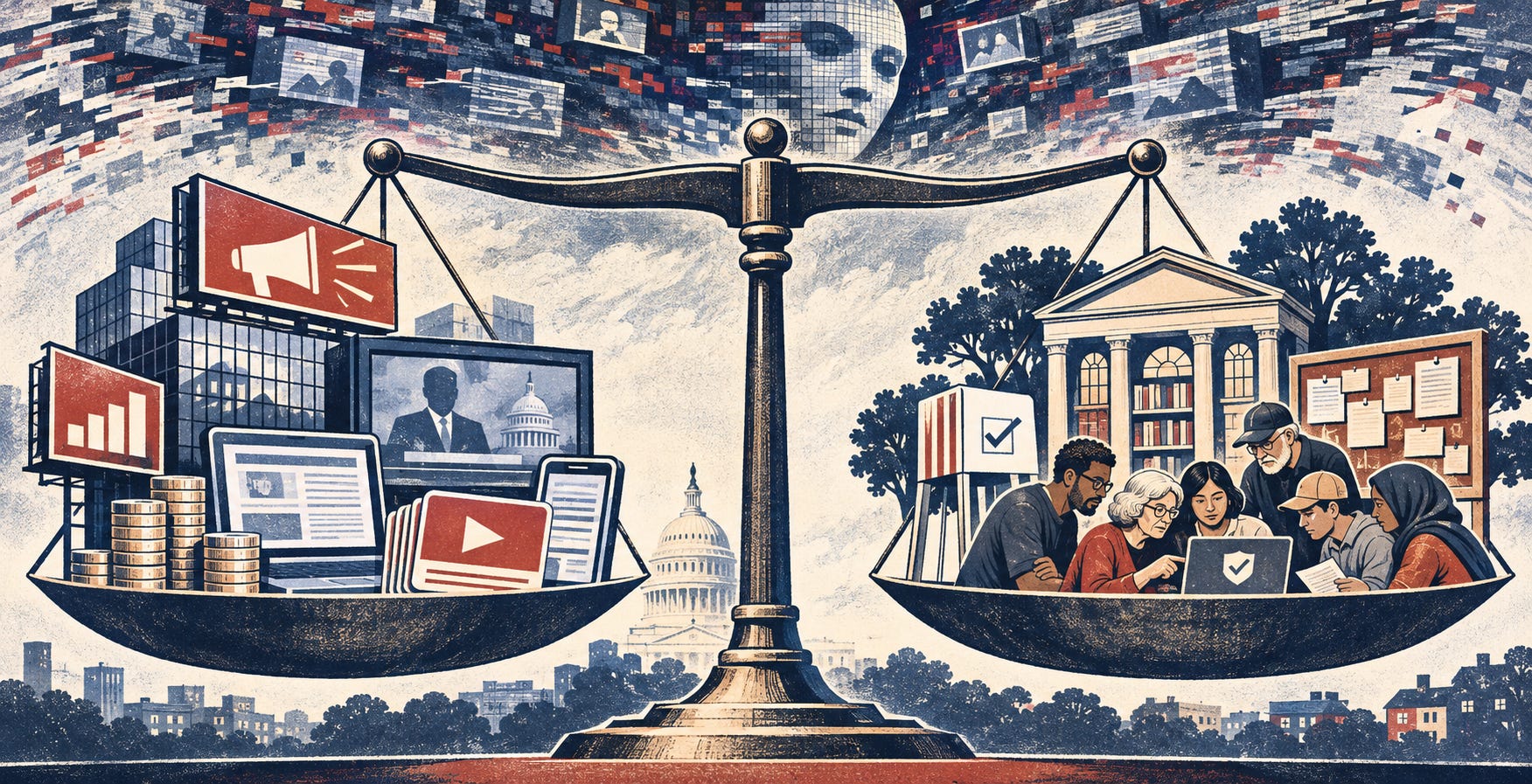
Market failure
I have argued that every citizen in our democracy should be entitled to such quality information — that the 1st Amendment should be understood not simply as protecting the rights of the press, but as recognizing the public’s right to a free press.
In this conception, the amendment carries an affirmative promise: that every American should have access to the information necessary to participate fully in democracy.
If we believe that every community, and every citizen, deserves access to the quality information about the things that determine the quality of their daily lives, then why would we leave it up to market forces to ensure that is the case? How would we grade the market’s performance at providing the quality news and information needed to ensure a healthy American democracy?
Just because some media companies have found sustainable business models, even if those are media companies that we like and that do admirable work, that does not disprove a market failure — much less establish that the free market can reliably provide the financial infrastructure for a healthy, productive information ecosystem.
Here’s some of what I wrote a few years ago, as part of a Knight-Columbia First Amendment fellowship:
For the companies that control our media, journalism befitting our democracy—focused on substance and complexity, not ephemeral scoops and partisan conflict—is not a viable business plan. It can’t win ratings wars, it doesn’t sell papers and drive traffic, and it certainly doesn’t produce the kind of profits needed in order to keep owners, executives, shareholders, and their offspring firmly planted within the American aristocracy. Adequately informing the whole of the public and maximizing profits are incompatible aims. We’ve convinced ourselves our goal is the former, yet we’ve constructed our democracy’s information ecosystem around the latter.
Insofar as we have entrusted access to quality information to the free market, it is clear, as Dick Tofel argues in response to Gingras, that we have seen a market failure when it comes to providing citizens with the accurate, reliable information they need to fully participate in democracy.
“To conclude that there have been market failures in accountability and local journalism, as I do, and that, if so, they are public goods (which I think is generally accepted) is the beginning rather than the end of further debate,” Tofel writes.
And that’s right.
So what should we do about it?
Again, from my 2023 piece:
If there is one lesson the last one hundred years of the American press has taught us, it is that the type of rigorous information ecosystem required of a healthy democracy is not sustainable as a market-supported enterprise—at least not in many of the communities that most desperately need accurate news and information, and certainly not at scale…
…if a free press is truly a vital public good, with the best media outlets vowing to serve as a public trust, then we must create an actual federal public trust to ensure every American has access to the news and information they need to be full citizens in our democracy.
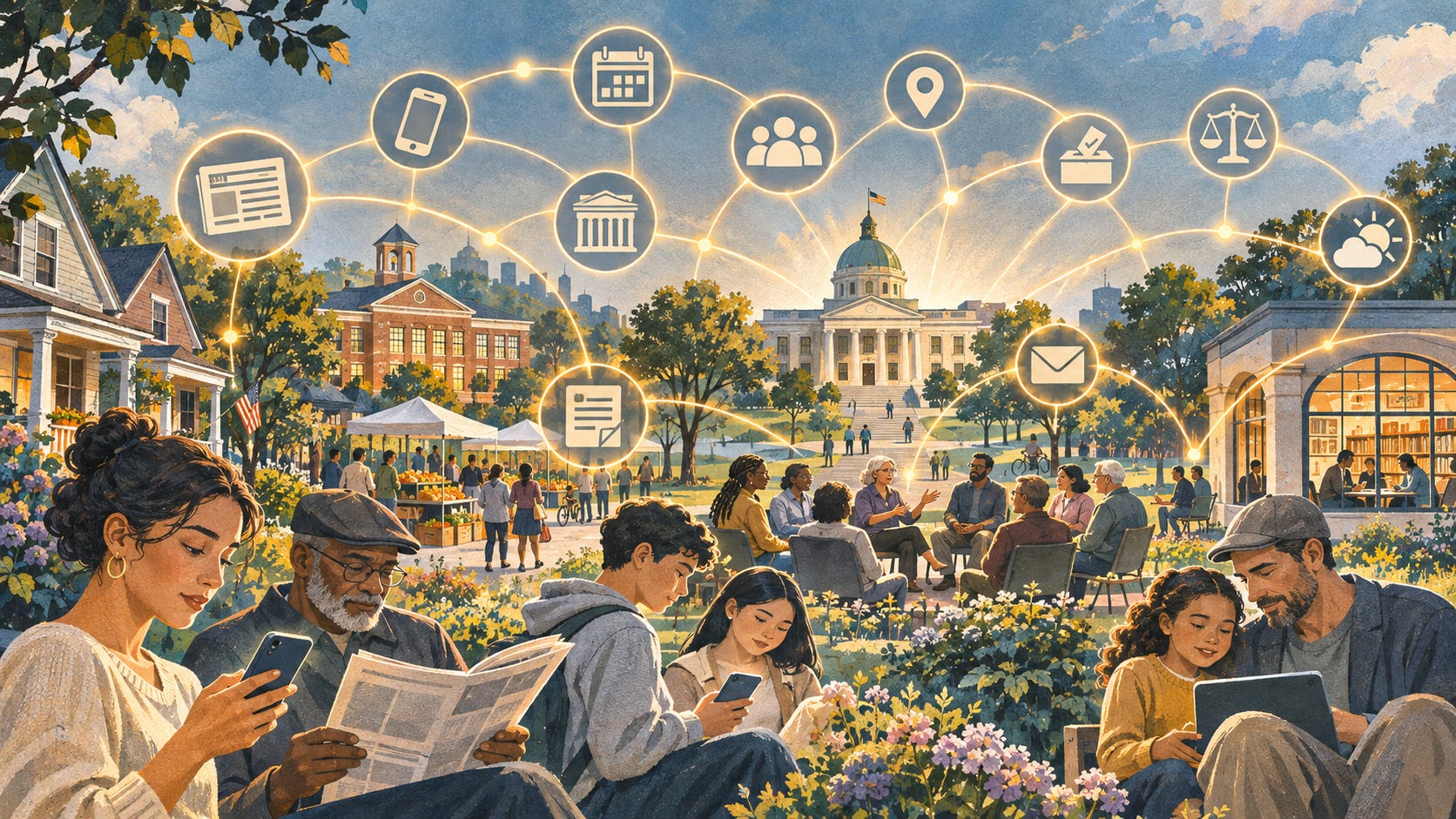
Information as a public good
Last month, Ford Foundation president Heather Gerken issued a 35-page memo about the seven strategic priorities for the philanthropy, which wields an $18 billion endowment.
Among its seven priorities, Gerken writes, Ford will seek to “defend information as a public good.”
A technological transformation that began with extraordinary promise—widespread access to information, deeper connections among people, a public square that could encourage pluralism and dialogue—has turned increasingly dystopian with time…
…Reputable media sources are drowned out, as a small number of large corporations profit from a business model that distorts and damages public discourse.
It’s significant that one of the country’s largest philanthropies — especially in a moment where advances in artificial intelligence are flooding all of our inboxes and digital streams with mountains of untrustworthy junk — is plainly declaring that information is a public good.
But universal access to quality news and information would require investment far beyond not only what the private market will provide, but also beyond what philanthropy has been and will be willing to offer up.
Those of us who care about the health of our news and information ecosystem have to be willing to have a real, rigorous conversation about the need for public dollars (i.e., government money).
Giving The People What They Want
As Plotz said in the comments I quoted to begin this piece, people don’t actually want “local news,” at least not the way that we’ve traditionally constructed it — or, at least, not enough to provide the revenue needed to support a full local news ecosystem.
What they do want is trustworthy, quality information to help them navigate daily life, understand their communities, and connect with others. How to register to vote, where to find community gatherings, how to navigate complicated court and tax systems, etc.
Whether or not they’re willing to click on news articles or watch television segments, people unquestionably have a stake in such information, and care deeply about whether their streets are safe, schools are funded, and where their tax dollars are going.
Even those who don’t love “local news” want, and deserve, access to quality information.
Instead of asking, once again, how we make journalism profitable (or “sustainable”), what if we thought bigger and inverted the question:
If we sought to guarantee that every community, and every citizen, had access to reliable, verifiable information — the kind necessary to empower full democratic participation — how would we go about doing that?
We’ve spent decades trying to “save journalism.” What if we embraced a different, equally lofty task: informing the whole of the public?
This is where a lot of traditional thinking runs into a buzzsaw, because there is virtually no way to treat information as a public good — an entitlement for all people — without significant, unprecedented (at least in the United States) amounts of public funding.
Of course, the prospect of government funding for journalism raises legitimate questions about political interference, editorial independence, and who gets to decide what constitutes information in the public interest. These are serious questions, deserving of serious answers. But these are questions of implementation, not reasons to abandon the ambition of a society in which every American is ensured access to necessary, reputable news and information. It is indeed possible to construct information institutions — or “trusts” — that are publicly financed, tailored to specific goals (such as providing civic and community news) but also structured to protect their independence from political interference.
A functioning democracy cannot depend entirely on whether enough people are willing to pay to learn about the decisions being made on their behalf. And we do ourselves, and our democracy, a disservice if we declare it a public good but do not follow that distinction with public dollars.
As long as we leave the information ecosystem up to the free market, we will continue to get more of the same — a handful of winners, many losers, and a populace drowning in a sea of A.I. slop and misinformation.
If quality information is, indeed, a public good, then we need to be willing to put public dollars behind ensuring there is universal access to it.