

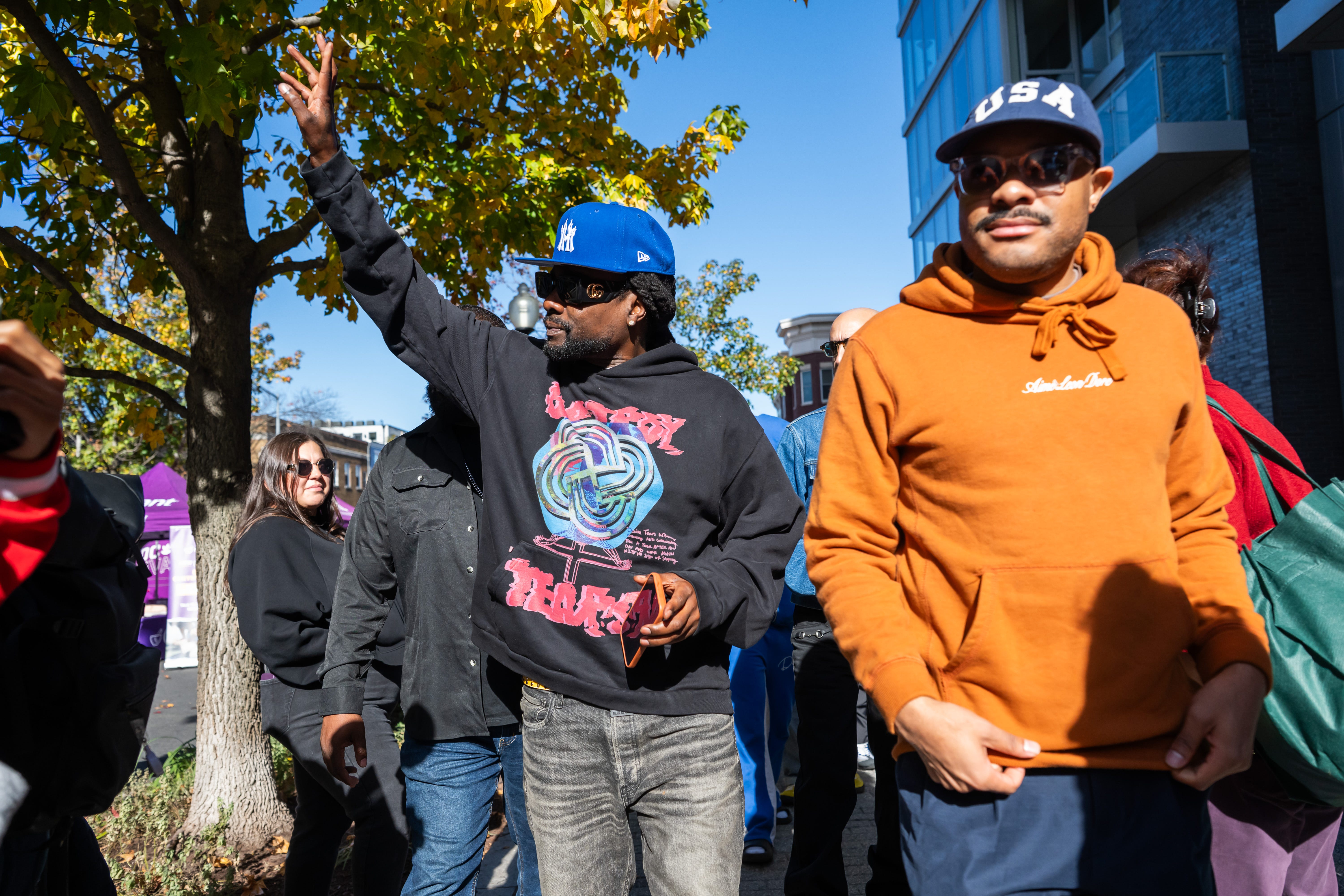
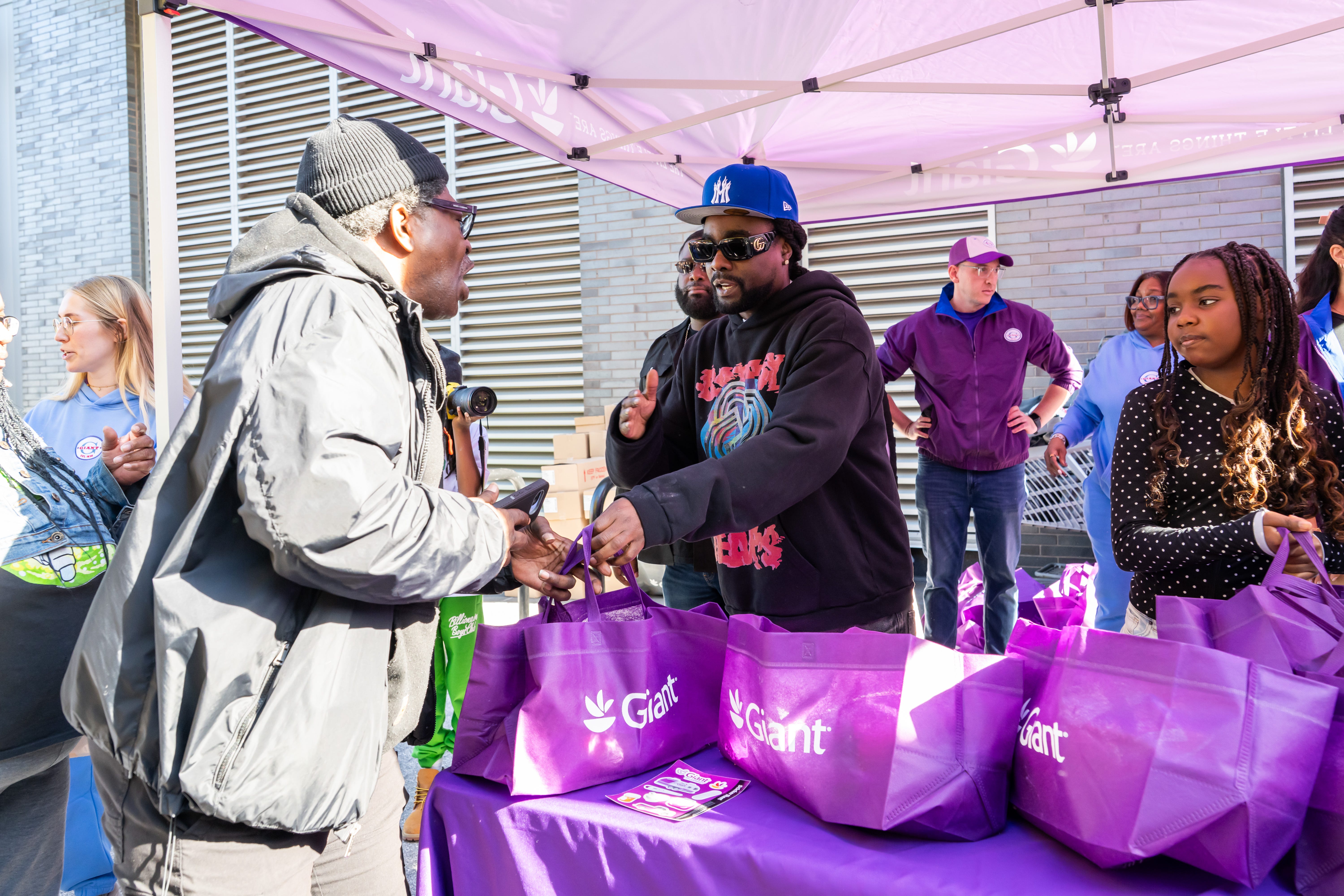
The energy shifted the moment Wale arrived at the Giant Food at Seventh and O Streets NW sometime around noon. The previous few hours had been an exercise in sensory overload. Hundreds of people had wrapped the corner, showing up as early as 7:30 a.m. for free turkeys1 and gift cards. The marching band from Duke Ellington and the go-go sensation TOB took turns entertaining the crowd. Now everyone wanted a moment with Wale, who smiled for photo after photo with D.C. residents who approached him like a longtime friend.
The turkey giveaway has become a staple of Wale’s Gifted Week, an annual series of events featuring artists and organizations from across the District’s cultural scene. This year’s festivities — which included a stint as principal for the day at Dunbar High School, a gala honoring 51 community leaders and innovators, and a flag football clinic with the Commanders — had an especially celebratory feel. Four days earlier, the Recording Academy had announced that Wale’s eighth album, everything is a lot., had earned him two Grammy nominations, including his first for Best Rap Album. The project is a classic, his artistic high-water mark to date. If the world is just, he’ll take home the statuette in February.
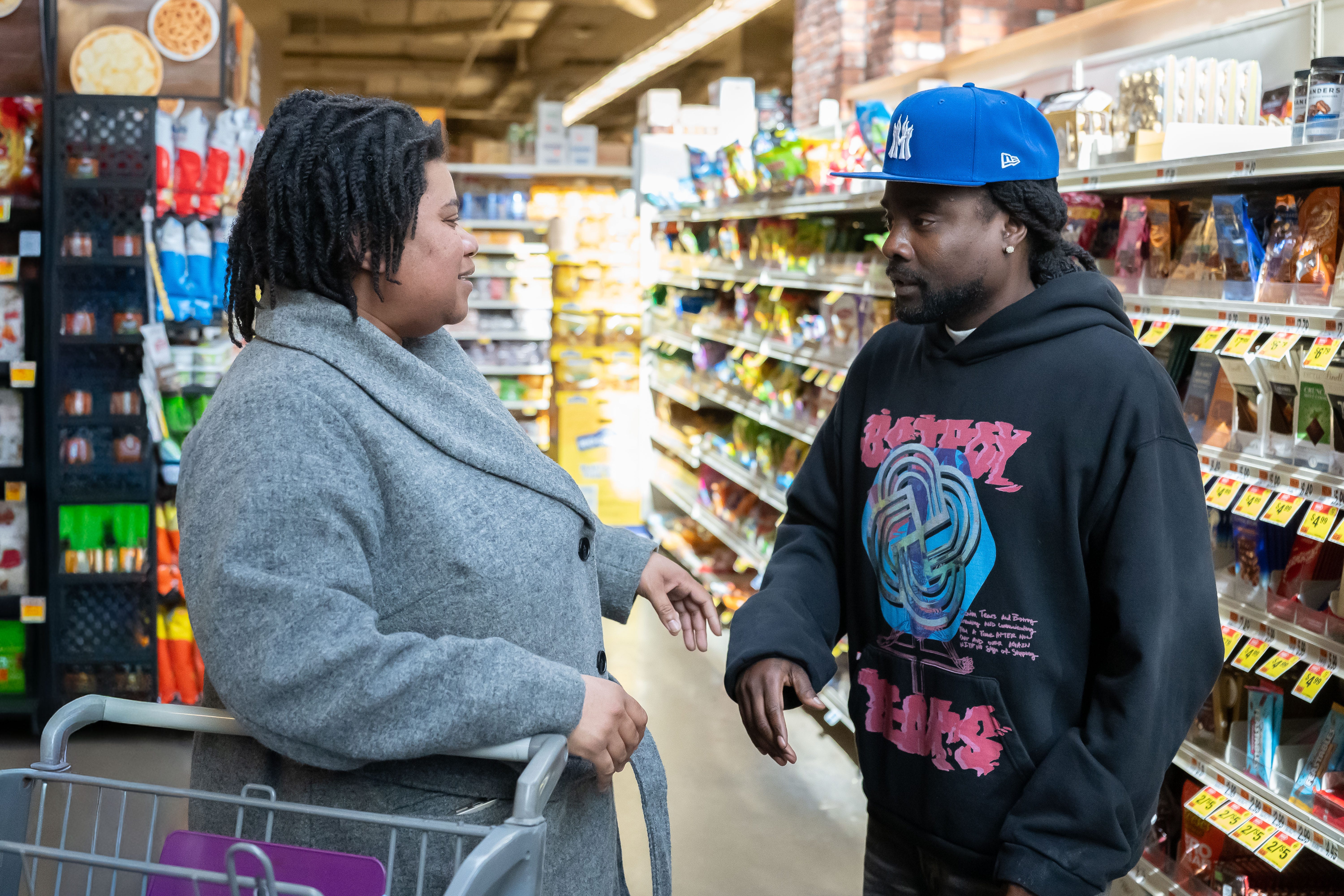
“I’m still processing all of it,” he told me later that afternoon, as we walked the aisles of Giant, stopping so he could greet shoppers and employees. “It’s been a long time coming.”
Now look: Anyone who knows anything about hip-hop knows the Grammys are terrible at assessing the genre’s zeitgeist. Yet for decades rappers have complained about the Grammys, at times refusing to submit their work or declining to show up for the telecast if they thought they were about to be snubbed.
Because the Grammys matter. A nomination confers a certain mainstream legitimacy and opens doors to bookings on morning shows. It gives an artist working in a historically underappreciated genre something to point to and say: See, I’m doing the damn thing.
These were just Wale’s second and third Grammy nods, and — despite his undeniable place as one of the great hip-hop artists of his era — his first such recognition since 2013. To understand why any of this still matters so much to Wale — and, to be clear, it absolutely does — it helps to understand where he’s from.
Despite what internet trolls will tell you, Olubowale “Wale” Akintimehin, 42, is a walking avatar of the triumphs, complexities and particularities of the region where he was raised.
His parents, Nigerian immigrants, met while attending the University of the District of Columbia. He spent his early childhood in the District at the height of the crack cocaine epidemic. He was among a generation of children who grew up knowing their mayor had been caught smoking crack, who were told of the fatal cocaine overdose of University of Maryland basketball star Len Bias as a cautionary tale. Once, he watched an addict dashing off with his mother’s jewelry box.
It’s history he probes on songs like 2017’s “CC White.”
It’s a song of desire and destruction, in which the narrator’s object of affection is also his source of harm. “It’s written in metaphor about something that plagued this beautiful city since the ‘80s,” Wale said of the song during an NPR Tiny Desk Concert, performed with a miniature version of the District’s red and white, three-starred flag propped in front of him and recorded on the same October 2019 night that D.C. Council member Kenyan McDuffie was advocating for go-go to be declared the official music of the District and that the Washington Nationals won the World Series.
Before high school, his parents moved the family into the diversifying Maryland suburbs, the communities that, as much as either side of the Anacostia, helped define what it meant to be Black in the DMV at a time when waves of immigrants, like his parents, were arriving from Africa. His family’s move to the burbs has prompted questions of whether Wale is truly a D.C. artist. But the story of African immigrants arriving in the American capital and making their way into Maryland to raise their children is itself a quintessentially Washington story. The story of Black Washington has changed in these last 30 years. Wale represents that change.
Wale had grown up manning the radio while riding shotgun in the taxi his father drove, developing an encyclopedic knowledge of the music that made airwaves, which in D.C. meant a lot of R&B and go-go — genres that he would later seek to infuse into hip-hop.
He came of age during a transitional period in hip-hop: the years that fell between its inner-city infancy and current global ubiquity; the years when home-burned mixtapes and music videos shown late at night on cable helped the genre fully penetrate the suburbs, and in turn produced an emerging online hip-hop press. Wale was its darling. As Jayson Buford put it, a “‘Blog Era’ upstart.”
Then, “Dig Dug (Shake It)” — his tribute to a famed go-go percussionist, Ronald “Dig Dug” Dixon of the Northeast Groovers — became a massive local hit. By 2008, he’d enlisted the support of producer Mark Ronson and released a mixtape inspired by Seinfeld. The blogs loved it. The labels wanted him — one of the first artists of his generation to build a big enough internet audience to convince industry bigwigs that he had what it takes to be a star.
He was braced for a true breakout — and still admits that he’s never gotten over what happened next. Some heartbreaks are formative.
By Wale’s account, his debut studio album leaked six months before its 2009 release, circulating widely on the very hip-hop blogs that had seeded his ascent. New, unreleased Wale? How could they help themselves? He, understandably, saw it as a betrayal. Then, when hard copies of the album were finally released on CD, they were in short supply at retail outlets in the DMV, leaving his most devoted fans unable to buy his album and support him.
Even his mom couldn’t find a copy. “Attention Deficit, the classic album that never happened,” Akintimehin later told The Fader.
“The sick, sick part of my mind lives to feel validated when other people enjoy my music,” he continued. “It jaded me, man. I became more sensitive.”
By 2010, he’d scored a true national breakout via a featured verse on Waka Flocka Flame’s “No Hands,” one of the staples of the Southern trap takeover of hip-hop party music in the early 2010s. The following year, he became a member of Rick Ross’s Maybach Music, where he dropped tracks alongside Meek Mill and Usher. His sultry “Bad” (the remix featuring Rihanna) was a mainstay at D.C.’s famed strip club Stadium in the years before its closure during the pandemic — a favorite there and at clubs across the country of dancers who liked to wind slow under soft lights.
He never became a commercial household name quite like Kanye or Drake or Kendrick or J. Cole. Still, he’s scaled the mountaintop. Two No. 1 albums on the Billboard 200. Appearances on massive crossover singles. No one who knows ball can question his game.
On his tracks, Wale is equal parts smooth- and shit-talker. His lyrics find him battling those who’ve betrayed him, left him, underestimated him. He grew famous for, among other things, getting into Twitter fights. “Someone on the internet can say something about me without knowing who I am and it can affect me,” he once told GQ. “I’m human too.”
Few writers are as thoughtful on social media as they are under their actual bylines. And it often felt like Akintimehin remained on the digital battlefield long after he’d already won. “It isn’t clear whether Wale’s anxieties are the fuel propelling him upward or the sandbags holding him down,” Washington Post music critic Chris Richards wrote shortly before the “mercurial star from a mercurial city,” then 28, released his 2013 album, The Gifted. It was clear, rereading that piece, that Akintimehin was desperate to become a star.
Throughout that project, Akintimehin comes across as contemplative, bitter, self-congratulatory and reflective. He’s proud, even as he feels intensely put upon. People expect too much from him, he says. They’re quick to believe the worst. They convince themselves that he, not them, is who has changed. I lost a lot of friends and they ain’t even dead, he rhymes on “LoveHate Thing,” the closest thing to a magnum opus within his discography.
Hate you then they love you // Then they hate you again…
Heal my heart, hurt my soul…Give me love, take it all away again
It’s a hymn about the instability of external validation. A timeless sentiment, and vintage Wale. But the world into which he released the song feels increasingly distant. The croon of those words poured out of car radios almost a decade and a half ago — back when there was a Black president, before the global pandemic that killed millions and hollowed out parts of the District that had been thriving in ways unseen since the ’60s.
It’s a song on which Wale emerges as the District’s most fitting mascot. Here is a city of national and global importance, but whose residents lack the same representation as hundreds of millions of other Americans. It’s full of people from other places, people who claim it as theirs, redeveloping stretch after stretch of indigenous D.C. even as those who’ve long been here, year after year, are seemingly left with even less.
D.C. is a city that feels it must continually demand recognition of its legacy, its culture, and its legitimacy. Is it any surprise that the District’s first hip-hop superstar would be the same way?
Both Akintimehin and his city have changed in the years since his early albums. Anyone who would question his talent, his success, or his legitimacy was long ago proven wrong. His management team was on the sidelines of last week’s heartbreaking Washington Spirit loss in the National Women’s Soccer League final, in a ground-level box alongside the team president and WNBA ‘People’s Princess’ Azzi Fudd. Expect to see him onstage at D.C. Mayor-elect Janeese Lewis George’s inauguration in January. There is no bigger stamp of mainstream approval than headlining the Thanksgiving turkey giveaway at your hometown supermarket. “Giving back to the city that made us, it’s an amazing feeling,” he told NBC4 Washington’s Jessica Albert, when she pulled him aside at the turkey giveaway. “This place made me and I’m going to continue to pour into it.”
Of course, being embraced and being understood are two different things.
One is fickle and fleeting. The other may very well be impossible.
Wale has described everything is a lot. as his most personal project. The disclosure is ultimately therapeutic; the creative process itself is excruciating. It’s a project about recognition: the desire for it, the indignities of seeking it, and its insufficiency once it’s been attained.
He’s described it as if Wale, the artist, and Olubowale Akintimehin, the person, are fighting. Slow down, the fast life is crazy, he instructs a younger version of himself on “Power & Problems,” which his team hopes will be the project’s next breakout single.
My power: I’ll never need no one.
My problem: I’ll never need no one.
My trauma: I’ll never be comfortable.
To some reviewers, it felt sonically safe, closer at times to R&B than rap. It was, undoubtedly, a departure from this year’s work by his elder millennial rap contemporaries Drake and Kanye, who in the last year or so both released projects that were, in their own ways, at once excellent and, sonically, more of the same. Wale innovated by going back to the basics. The production is sharp, but minimalist. His samples are restrained and targeted: almost all R&B classics, from Soul II Soul to SWV to Sheryl Ann Padre’s version of Maxwell’s classic “Pretty Wings.”
Throughout the album, he sounds, as one critic noted, “comfortable in his role as elder statesman.” It is a project that was clearly created by a grown man. “He’s a craftsman,” NBA star Kevin Durant, the pride of Prince George’s County, said when he was asked at a postgame press conference about the album. “He likes to get better at his skill...I’m just grateful to know him.”
The first time I streamed the album, last spring, I found myself intoxicated by “Corner Bottles,” one of the album’s final tracks. It’s a moody account, set atop jittering percussion and hypnotic instrumentation, of a destructive emotional bender that follows a breakup.
I wasn’t ready, you told me to go, keep all my clothes, just give me some closure
I would just be on the sofa (sleepless nights), yeah
That when I knew it was over, that when the homies was sayin’, “I told ya”
Rather than process the breakup, the song’s narrator is in the club, two women in his section. He’s unblocking the phone numbers of the people who you’d made him cut off. He knows better, but he’s recruiting other people into his attempt to avoid his grief. None of them are main characters; they’re extras in the story of you two, of the breakup. They think they’re the talent; he treats them like the help. Convenient distractions who become collateral damage.
He’s still thinking about you.
I really wish I could grow up, but I don’t miss you when I’m sober
It’s a track that evokes the kinds of memories that many young men spend years trying to outrun and some older ones finally allow themselves to revisit. The song names the destructive patterns without promising they’ll be broken. Its words could apply to more than one past relationship — and, perhaps, to some still to come.
Corner bottle (sleepless night)
That’s how the love goes
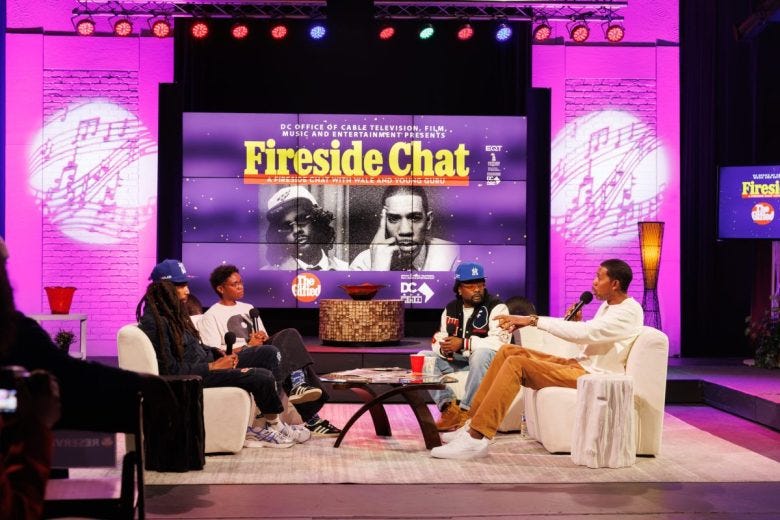
Later that night, Akintimehin crossed town — leaving the redeveloped blocks of Shaw and making his way to D.C.’s Office of Cable, Television, Film, Music and Entertainment, a brick building tucked in a stretch of Northeast that, for better and worse, still looks, feels, sounds, and smells like old D.C. At an hour of Friday night when other places were buzzing, the city’s favorite was onstage in a studio where the only action outside was a brief shoving match between two homeless men and a slow trickle of cars through a McDonald’s drive-through.
That evening, he sat down for a fireside chat with his mentor, Gimel “Young Guru” Keaton, the Grammy-winning producer and audio engineer. “Talent is something you’re given,” Keaton said, recalling his early days, when he and other aspiring producers would befriend the workers at Best Buy and Guitar Center so that they could get extra practice on the equipment. “You have to figure out how to make your talent better by mastering your craft.”
After discussing his path to stardom, and his family’s move from the District to Montgomery County, Akintimehin reflected on the days that the District — the city inside the capital — had shaped him into the man he’d become.
He’s older now. He gets into fewer Twitter fights, even if he’s still willing to mix it up. Some of that defensiveness, he knows, comes from where he’s from.
“There’s something about being from here that wires you differently, because everybody that’s made it from here — even if we’ve made it to the highest of high — we’re still defensive,” he explained. “We all got that like chip on our shoulders.”
— 30 —
During the 2026 holiday season, Giant Food and the Giant Family Foundation are giving out more than $229,000 in grants and donating 7,000 turkeys to more than 25 nonprofit organizations across the DMV.